



News from US States
Legislative leaders tell DeSantis a special session can wait as local budgets shrink.
 By Liberty Grace HaleNovember 27, 20265 min read
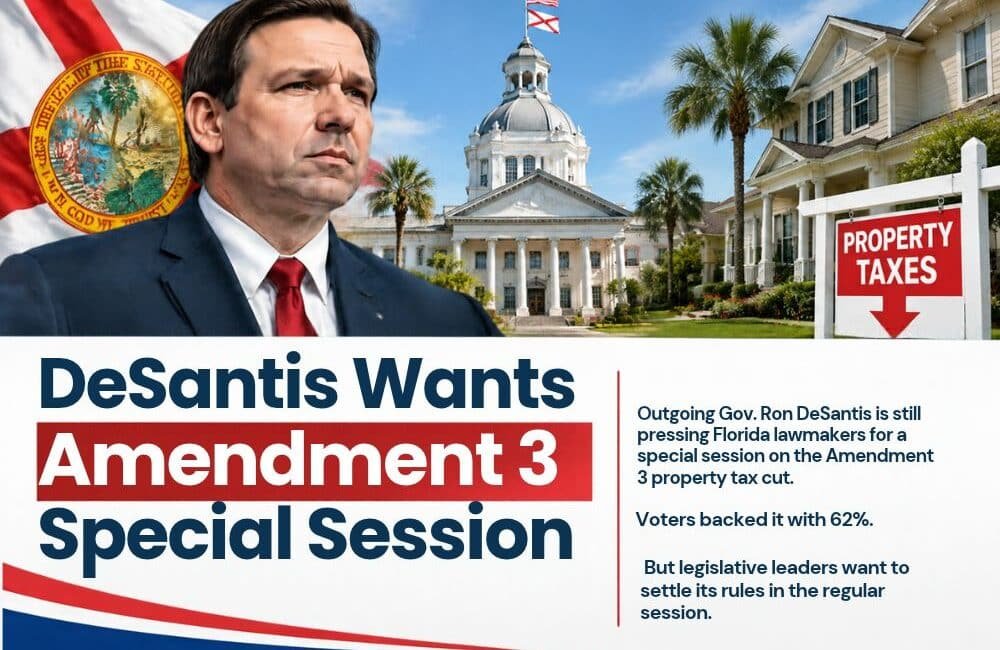
Outgoing Gov. Ron DeSantis is still pressing Florida lawmakers for a special session on the Amendment 3 property tax cut. Voters backed it with 62%, but legislative leaders want to settle its rules in the regular session.
Key facts
- 62%Share of the vote Amendment 3 won, above the 60% needed
- $150,000Non-school homestead exemption in 2027, up from $50,000
- $4.93 billionProjected local revenue loss in the next fiscal year
- Jan. 5Day Gov.-elect Byron Donalds takes over from DeSantis
Analysis: Homeowners gain, local budgets lose
Outgoing Gov. Ron DeSantis is still pressing Florida lawmakers for a special session on the Amendment 3 property tax cut.
Voters approved the measure with 62% of the vote, two points above the 60% it needed, the News Service of Florida reported. It raises the non-school homestead exemption from $50,000 to $150,000 in 2027 and to $250,000 in 2028. Homeowners are the winners. Cities, counties and other local taxing bodies are the losers: they are projected to lose $4.93 billion in the next fiscal year, rising to nearly $12 billion in five years.
“I’d hate to go into the new year, and people are going to be planning to get $2,000 relief from property tax and then just get nickel and dimed in other ways.”
The new legislative leaders, Senate President Jim Boyd, R-Bradenton, and House Speaker Sam Garrison, R-Fleming Island, say the work can wait for the regular session. DeSantis told reporters to “stay tuned” and said he was not giving up. He has until he leaves office on Jan. 5. By Nov. 23, he had not called a session himself, Florida Phoenix reported.
DeSantis wants a framework before the Jan. 1 start
DeSantis wants a framework in place before the amendment takes effect on Jan. 1. The day after the vote, he told reporters at the state Capitol that he would convene a special session within two months, before his second term ends in early January. He said it would set the schedule for the larger exemption while “limiting local governments from just doing an end run around the amendment and taxing them in other ways.”
His wish list goes further. He wants limits on new or higher local taxes and fees, money for rural counties with low tax bases that rely on property tax revenue, and grants to help bedroom communities pay for law enforcement and public safety. He also wants lawmakers to “define how out-of-staters who move here qualify” for the exemption. Under the amendment, people who move to Florida after Jan. 1 must wait five years for the added break. The measure also cuts the cap on yearly assessment increases for non-homestead property from 10 percent to 5 percent.
Legislative leaders say the regular session has time
Legislative leaders say the regular session has time to handle the details. Boyd and Garrison have described the amendment as “self-implementing,” Florida Phoenix reported after the organizational session. “We believe there’s time later on, during the regular session, to talk about this and give it the time and the attention that it needs,” Boyd said.
Garrison, in his speech after taking the gavel, warned that “the laws of economics remain undefeated, and there is still no such thing as a free lunch.” He said Amendment 3 “impacts each of our 67 counties differently.” Both leaders said they want to hear from DeSantis and from Gov.-elect Byron Donalds. DeSantis replied that a governor can summon the Legislature. “The governor has the power to call one. And they’ve got to show up,” he said, while conceding that lawmakers could gavel in and leave without acting.
Local governments start cutting, and DeSantis pushes back
Local governments are already adjusting, and DeSantis does not like what he sees. Deltona moved to cut support for a Christmas parade. The Pinellas Suncoast Transit Authority proposed making riders pay more for a system that provides rides to disabled residents, CBS News Miami reported. DeSantis has labeled such moves “Washington Monument syndrome,” meaning cuts to cherished services meant to sour the public on the tax cut instead of trims to personnel costs.
He points out that property tax revenue collected by local governments rose from $32 billion to $62 billion in eight years, so cities and counties with large tax bases should be able to absorb the loss. Lawmakers are more cautious. They worry about rural counties and small towns that cannot take large cuts without slashing needed services.
Conclusion
Florida homeowners keep their gain either way. The amendment takes effect on Jan. 1, and the larger exemption arrives in 2027. What remains open is who pays and how. Without a special session, decisions on local fees, help for rural counties and the rules for newcomers move to the regular session under a new governor. DeSantis, who is term-limited, hands the office to Donalds on Jan. 5. Until then, he can call lawmakers back to Tallahassee, but he cannot make them act. For cities and counties, the loss is already showing up in parade plans and bus fares.
Frequently Asked Questions
What does Florida’s Amendment 3 do?
It raises the non-school homestead property tax exemption from $50,000 to $150,000 in 2027 and to $250,000 in 2028. People who move to Florida after Jan. 1 must wait five years for the added exemption. It also lowers the cap on yearly assessment increases for non-homestead property from 10 percent to 5 percent.
How much support did Amendment 3 get from voters?
It received 62% of the vote, two points more than the 60% needed to become law, according to the News Service of Florida.
Why does DeSantis want a special session now?
He wants a framework set before the Jan. 1 effective date. His goals include stopping local governments from replacing lost revenue with new or higher taxes and fees, funding rural counties with low tax bases, creating grants for bedroom communities, and defining how out-of-state newcomers qualify.
Why are Florida’s legislative leaders waiting?
Senate President Jim Boyd and House Speaker Sam Garrison say the amendment is self-implementing and that the regular session gives the issue the time and attention it needs. They also say they want to hear from DeSantis and Gov.-elect Byron Donalds first.
How much revenue will local governments lose?
Local governments are projected to lose $4.93 billion in the next fiscal year, rising to nearly $12 billion in five years. Property owners are projected to save the same amounts. DeSantis notes that local property tax revenue rose from $32 billion to $62 billion in eight years.
References
- Goñi-Lessan, A. (2026, November 4). DeSantis wants Florida Legislature to act on Amendment 3 before he leaves office. Miami Herald (News Service of Florida).
- Waagmeester, J. (2026, November 23). Gov. DeSantis renews messaging on special session before he leaves office. Florida Phoenix.
- CBS Miami Team. (2026, November 24). Gov. DeSantis presses for Amendment 3 special session, criticizes local cuts as Florida lawmakers hesitate. CBS News Miami.