



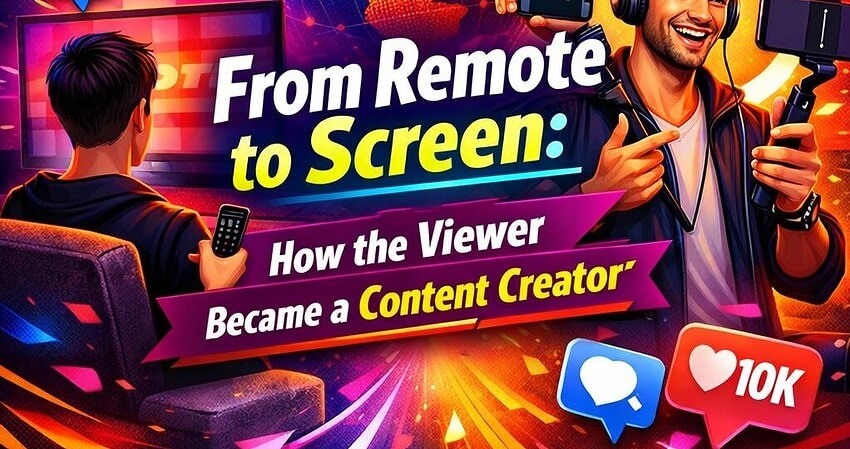
The transition from the one-way structure of traditional media to the interactive world of social media..
*Murat Yeşil
IstanbulYerelHaberler
News Summary
From “Remote” to Screen: How the Viewer Became a Content Producer. This study examines the transition from the one-way structure of traditional media to the interactive world of social media, the radical transformation of the audience profile, and the striking data behind this process. We analyze how the individual, once passive in front of the screen, has become a global publisher today and how the power dynamics have shifted.
From Passive Viewer to Active Broadcaster
In the era of traditional media, announcing a news story required a massive printing press or multi-million dollar studios. Today, all we need is a smartphone and an internet connection. Platforms like YouTube, Instagram, and TikTok have turned into pulpits where the voice of the “ordinary” person can reach millions. Instead of waiting for the evening news, we now watch live broadcasts from citizens at the scene. The stars of television have left their places to chefs giving recipes from their kitchens, young people playing games in their rooms, and content creators documenting life on the street.
The Era of the “Prosumer”: Both Consume and Produce
Communication experts explain this new era with the concept of the “Prosumer” (Professional Consumer). We no longer just watch; we comment on what we watch, share it, criticize it if we dislike it, and even film our own videos inspired by that content. Social media has torn down the thick wall between the viewer and the broadcaster. Today, a single tweet sent by a Twitter (X) user can generate more public opinion than a multi-hour discussion program on a giant television channel. While it once took million-dollar studios to break a news story, today, 4K camera phones in our pockets have become the biggest rivals to mainstream media.
Speed and Interaction: The Currency of the New World
Traditional media’s greatest loss has been “time.” The patient audience that once waited for the newspaper to be printed or the main news to start no longer exists. While it takes hours for a newspaper to go to print, a 15-second video shared by an X (Twitter) user from the scene can determine the global agenda. Furthermore, in this new order, the engagement rate is the sole metric of success. Viewers can now talk back to the screen, ask questions to the broadcaster, and directly influence the course of the content.
📊 Table 1: “Old vs. New” in Media Consumption (2024 Projections)
This table, which we prepared based on Statista 2023 data, clearly demonstrates the decline of traditional outlets and the rise of digital.
| Media Type | Daily Usage Time (Average) | Annual Change Trend | Primary Audience |
| Television (Linear) | 2 Hours 50 Minutes | – 4.2% (Declining) | Ages 45+ |
| Social Media | 2 Hours 23 Minutes | + 6.8% (Rising) | Ages 16 – 44 |
| Digital Video (YouTube/Netflix) | 1 Hour 45 Minutes | + 12.1% (Rapid Growth) | All Demographics |
| Printed Newspaper/Magazine | 12 Minutes | – 15.5% (Sharp Decline) | Ages 60+ |
The Digital Age in Data: Everyone is a Broadcaster
The traditional media concept of “prime time” has been replaced by the “anytime, anywhere” model. Current data reveals the scale of this change:
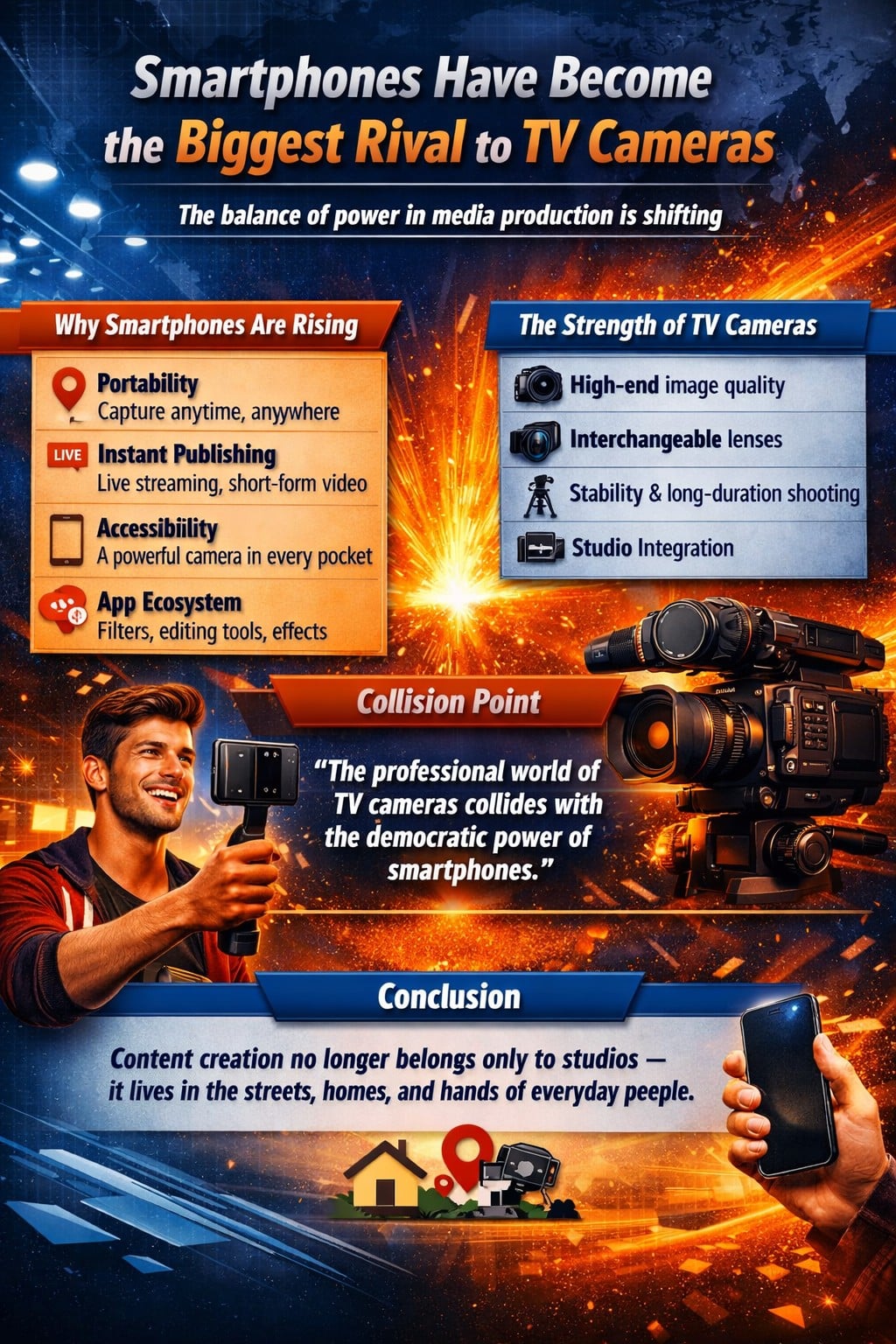
Smartphones Have Become the Biggest Rival to TV Cameras
- YouTube: More than 500 hours of video are uploaded to the platform every minute. This means reaching the broadcasting capacity of a traditional TV channel’s decades in just seconds.
- Social Media Usage: While people globally spend an average of 2 hours and 23 minutes a day on social media, traditional TV viewing times are declining by 3% to 5% worldwide each year.
- User-Generated Content (UGC): 80% of consumers trust content created by other users (comments, videos) more than a brand’s own advertisements.
📊Table 2: Stages of Transformation from “Viewer” to “Content Producer”
| Stage | User Role | Primary Tool | Communication Style |
| 1990 – 2005 | Passive Recipient | Remote Control | One-Way (Watch Only) |
| 2005 – 2012 | Participant | Computer / Keyboard | Commenting / Sharing |
| 2012 – Present | Content Creator | Smartphone / App | Two-Way (Publish & Interact) |
The Paradox of Trust and Authority
Transformation brings a major question with it: Reliability. While traditional media carries an editorial filter and legal responsibility, social media harbors the risk of “fake news.” Despite this, viewers prefer the “sincerity” and “speed” of social media over corporate coldness.
Conclusion: Power Has Changed Hands
The transition from “remote to screen” is not just a technological change, but a power revolution. Decisions once made behind the closed doors of media plazas are now replaced by algorithms and direct public interest. In today’s world, the largest channel is the smartphone you hold in your hand; the largest broadcaster is you.
In the golden age of television, power lay not with the hand holding the remote, but with a limited number of institutions behind the screen. “Main news” hours determined social rituals, and newspaper headlines drew the boundaries of public opinion. However, since the mid-2000s, with the acceleration of the internet and the entry of smartphones into pockets, this structure has been shaken to its core. Today, television channels are trying to adapt to the dynamics of YouTube and TikTok to avoid losing viewers.
Sociologically, this situation is explained by the concept of the “Prosumer” (Producing Consumer). While in the old world, information flowed from top to bottom, in the new media order, information spreads horizontally among millions of users within seconds. The cumbersome editorial processes of traditional media are facing a major test against the instantaneous speed of social media.
❓ Frequently Asked Questions – FAQ
1. What exactly does the term “Prosumer” used in the news article refer to?
- The term “Prosumer” is a blend of “Producer” and “Consumer.” It refers to the “active user” who no longer just sits in front of the TV consuming what is offered but also comments, creates content, and ensures its distribution.
2. What is traditional media’s biggest weakness compared to social media?
- The biggest weakness is being “static” and “one-way.” Traditional media does not give the viewer a voice and cannot receive instant feedback. Social media, however, gives the viewer the chance to be part of the broadcast and intervene in the process instantly.
3. How has the transformation of viewers into content creators affected the quality of news reporting?
- This is a double-edged sword. On one hand, it has democratized journalism by providing instant information flow from the scene; on the other hand, it has led to an increase in information pollution (disinformation) due to the lack of professional editorial filtering.
4. Why have smartphones replaced remote controls?
- While a remote is just a selection tool, a smartphone is both a receiver and a studio. Thanks to the smartphone, a user can not only choose what to watch but also broadcast, edit, and reach millions with a single click.
5. Why do brands prefer working with content creators instead of traditional advertising?
- Because content creators offer “sincerity” and a “direct bond.” Viewers trust the experience of someone they trust and follow much more than an advertisement coming from an anonymous voice-over.
Author: *Murat Yeşil, Ph. D.
Professor of Journalism & Media Studies
Managing Editor
IstanbulYerelHaberler
📚References:
- Jenkins, H. (2006). Convergence Culture: Where Old and New Media Collide.
- We Are Social & Meltwater (2024). Digital 2024: Global Overview Report.
- Reuters Institute (2023). Digital News Report.
- Toffler, A. (1980). The Third Wave.