


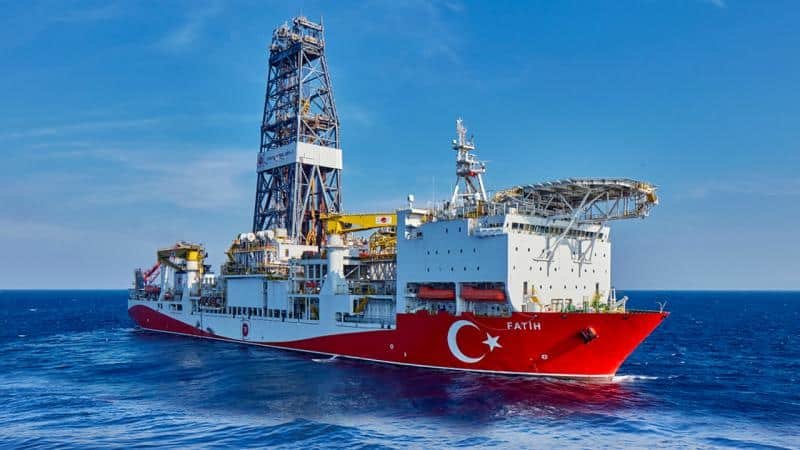
A new DW documentary examines Turkey’s bid to become an energy hub.
Why a DW Documentary Asks If Turkey Can Become an Energy Hub
A new Deutsche Welle documentary asks whether Turkey can become an energy hub even though it still buys most of its oil and gas from abroad. The 14-minute film, Why everyone suddenly needs Turkey for energy, was published on November 7, 2026, as part of the DW News series Mapped Out. It was reported by Serdar Vardar, Leonie von Hammerstein and Emily Sherwin. DW says Turkey already has pipelines, floating power ships and what it calls Europe’s biggest solar plant, yet still depends on its neighbors for fuel. The film asks whether the host of the 2026 U.N. climate conference can become “the world’s new energy dealer.”
The documentary opens with Turkish floating power plants that, DW says, can supply a whole country with electricity in just a few weeks. One ship that docked in Guinea-Bissau provided power for years. After the United States blocked Cuba’s oil imports and the island faced blackouts, Turkish ships also supplied Cuba with electricity, the film says. On-screen credits identify the operator as Karpowership, part of Karadeniz Holding. The company says it owns the world’s biggest fleet of floating power plants and has powered grids in more than 20 countries. DW notes that the ships could also sail away, so they tend to go where Ankara is building influence.
Pınar İpek, of TOBB University of Economics and an expert on energy and Turkish foreign policy, tells DW this overlap of state experience and private business is “a useful cooperative tool for Turkey’s bilateral relations” and “a commercial opportunity.” The ships burn gas or heavy fuel, and Turkey itself is not rich in oil or gas, the film says. Ghana is the example DW uses: it pumps its own gas but lacks enough power plants, so Turkish ships turn that gas into electricity and Ghana pays the company. President Recep Tayyip Erdoğan himself saw one of the ships off, the documentary says. “That’s the Turkish model in a nutshell,” the narrator says. “Turkey doesn’t have the energy, but it has been building infrastructure.” Turkey has also built a state fleet of drill ships that, DW says, now hunt for oil and gas as far away as Somalia, Pakistan and Libya.
From Transit Route to Marketplace
Geography is the heart of the plan. Turkey sits between fossil fuel producers and major consumers. Many routes that carry oil and gas out of Russia, the Caspian and the Middle East toward the European Union run through the country or right past it, the film says. In a clip used by DW, Erdoğan calls Turkey “the strongest bridge between the regions rich in energy and the countries that need it.” Turkey is also a large consumer. Among major economies, only China’s demand for gas has grown faster than Turkey’s, the documentary says. In the last decade, Erdoğan’s government spent around $500 billion on imported energy, the film claims, more than Colombia’s entire economy. Ankara wants to cut that bill by finding more of its own resources and by becoming more than a transit country. DW defines an energy hub as a marketplace: fuel comes in, is processed, priced and then sold.
Pipelines already bring gas from Russia and Iran. The film says Turkey did not want to depend fully on those neighbors, so it has focused more on energy from its close ally Azerbaijan. Because pipelines tie a buyer to suppliers with long-term contracts, Turkey also built LNG terminals to receive gas from anywhere in the world, plus storage sites filled in summer, when gas is often cheaper, and drawn down in winter.
Ceyhan, Hormuz and Europe’s Need
Kadri Tastan, an expert on Turkey-EU relations at the German Marshall Fund in Brussels, tells DW a blunt fact: “Without Europe, there is no energy hub.” The EU calls Turkey increasingly authoritarian, and Turkey tries to balance many partners, the film says, but the two sides still need each other on energy. The port of Ceyhan stands at the center of the hub plan. Two major pipelines end there, one from northern Iraq and one from Azerbaijan. In a clip with English subtitles, Energy Minister Alparslan Bayraktar says, “We have the goal of converting Ceyhan into something akin to Rotterdam.” Rotterdam does not produce oil, the film explains. It has storage tanks, refineries and Europe’s huge market. That is what Erdoğan wants in Ceyhan as well.
DW says this route became more important when Iran blocked the Strait of Hormuz and left tankers and their oil stranded. Global fuel prices soared. Before what the film calls the Iran war, little oil flowed through the pipeline to Ceyhan. After the crisis, Iraq lost its main source of income, the documentary says, and Turkey and Iraq agreed to sharply increase the amount of oil moving on that route. The two countries are also in talks on the Development Road, a rail and road corridor that would link the Gulf to Europe through Iraq and Turkey, with energy as part of the plan. İpek puts the politics simply: when there is instability, Turkey can use energy as leverage.
Europe’s rush for new supplies after Russia’s full-scale invasion of Ukraine also raised Turkey’s profile. Tastan says gas from Azerbaijan became “super important,” and that Turkey’s transit role grew with it. That Azeri gas reaches Europe through the TANAP pipeline. TurkStream, the film adds, is now Russia’s last remaining major pipeline route into the EU. European countries are still buying a lot of Russian LNG and gas, DW says. The film argues that even if Europe stops buying Russian gas directly, the fuel might still arrive with Turkey’s help. The narrator compares the LNG business to Turkish coffee. Turkey does not grow the beans. It buys gas from different suppliers, stores and mixes it in the same pipes, and sells a “Turkish blend.”
Import Risks, Black Sea Gas and Sun
The strategy has limits. İpek tells DW that about 40 to 41 percent of Turkey’s natural gas imports still come from Russia, “and that can be problematic.” In 2015, the film recalls, Turkey shot down a Russian fighter jet at the Turkish-Syrian border, saying it had violated Turkish airspace. Russia then suspended talks on TurkStream before the two sides later smoothed things over. In 2022, the film says, Iran halted gas exports to Turkey for 10 days in mid-winter, and Turkey had to cut electricity to some industrial zones for the first time, İpek says. Tastan draws the lesson: “If you don’t have energy security, basically, economically, you are not fine.” He says the new infrastructure is primarily about Turkey’s own security. “And Turkey is not an energy-rich country.”
A drill ship later found natural gas off Turkey’s Black Sea coast. In a clip, Erdoğan tells the public that Turkey has made its greatest natural gas discovery in the Black Sea. The film says he later flipped the switch on the first delivery and promised every household a month of free gas ahead of a tight election. Turkey says the finds could replace years’ worth of gas imports. Tastan calls the discovery an important source that will reduce the import bill and may leave more gas available for possible export to Europe.
In 2023, the film says, Turkey built the biggest solar power plant in Europe, a site almost six times bigger than Central Park in New York. The company behind it says the plant produces enough electricity for two million people. Renewables overall generated almost half of Turkey’s electricity in 2025, according to DW, which points to an Ember Energy study shown on screen and says wind and solar saved Turkey around $15 billion in gas imports in the last two and a half years. Turkey still burns a lot of fossil fuels, the film stresses. Ankara has pitched a “green energy corridor” of power cables that would link Azerbaijan, Georgia and Turkey to Europe, timed with the 2026 climate conference in Turkey. İpek says expanding renewable electricity “actually brings Turkey as a hub” again. The scale is still small. Turkish electricity exports are only in the hundreds of millions of dollars, not billions, the film says. Solar farms, grids and batteries need huge investment, and with what DW calls Turkey’s dire economic situation, many foreign investors are holding back.
Frequently Asked Questions
-
What is the Deutsche Welle film about?
The 14-minute Mapped Out film Why everyone suddenly needs Turkey for energy, published on November 7, 2026, examines Turkey’s bid to become an energy hub even though it still imports most of its oil and gas.
-
What is an energy hub, according to the film?
DW defines an energy hub as a marketplace: fuel comes in, is processed, priced and then sold.
-
Why is Ceyhan important in the documentary?
Two major pipelines end at Ceyhan, from northern Iraq and Azerbaijan. Energy Minister Alparslan Bayraktar tells DW Turkey wants to convert Ceyhan into something akin to Rotterdam.
-
How much of Turkey’s natural gas still comes from Russia?
Pınar İpek tells DW that about 40 to 41 percent of Turkey’s natural gas imports still come from Russia, which she says can be problematic.
-
Does the film say Turkey will succeed as an energy hub?
Kadri Tastan tells DW the dream is half full and half empty. The narrator says Turkey is still more a transit country than an energy exporter and needs partners who trust it enough to commit for the long term.
Conclusion
So is the energy hub only a pipe dream? Tastan answers that the dream is half full and half empty. The narrator’s closing judgment is cautious. Right now, Turkey is still more a transit country than an energy exporter. It has built a lot of infrastructure. But it needs partners who trust it enough to commit for the long term. “And that last bit,” the film says, “is harder to build than any pipeline.”
Bibliography / Sources
- Gümüş, B. S. (2025, January 28). Türkiye surpasses 2025 solar target as capacity doubles in 2.5 years. Ember. https://ember-energy.org/latest-insights/turkiye-surpasses-2025-solar-target-as-capacity-doubles-in-2-5-years/
- Reuters. (2026, April 21). Alternative routes for Middle East oil and gas due to Hormuz disruption. https://www.reuters.com/business/energy/alternative-routes-middle-east-oil-gas-due-hormuz-disruption-2026-04-21/
- Vardar, S., von Hammerstein, L., & Sherwin, E. (2026, November 7). Why everyone suddenly needs Turkey for energy | Mapped Out [Video]. DW News. https://www.youtube.com/watch?v=ZpIZAyobk0Q