



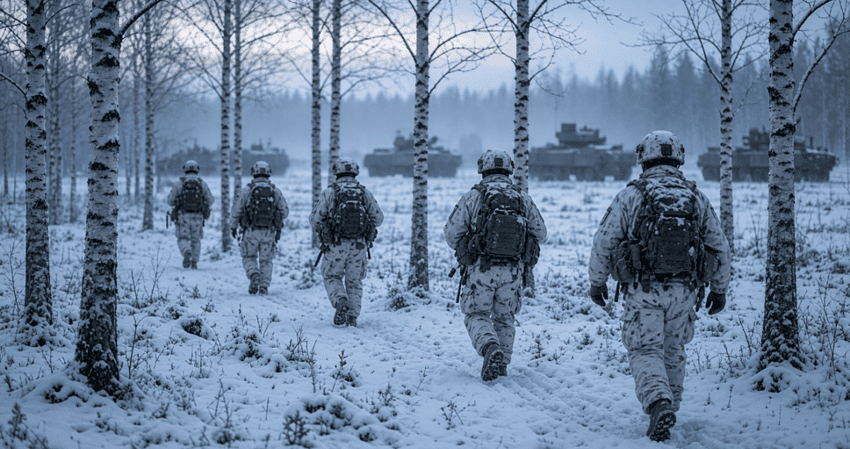
Europe is rearming for a possible clash with Russia by 2030 as Putin says Moscow is ready and US-led peace talks resume in Abu Dhabi.
What Happened
European governments are keeping up their military and financial support for Ukraine while warning their own citizens that a wider confrontation with Russia could come by the end of the decade. In Berlin on Nov. 3, German Chancellor Friedrich Merz pledged more air defense and energy aid for Ukraine ahead of winter and said he saw no sign that Moscow was serious about a ceasefire. EU Defence Commissioner Andrius Kubilius has pointed to intelligence assessments in several member states that Russia could be ready to attack EU countries before 2030.
Russian President Vladimir Putin responded to those warnings on Oct. 29. Speaking after a Russia-Africa summit in Moscow, he said: “We are ready, but we do not want any war with Europe,” according to Interfax, as reported by Kyiv Post. He added that those talking about preparing for war by 2030 were free to prepare, and warned that if things went too far, there would be no winners.
Diplomacy is moving on a separate track. US envoy Steve Witkoff said Washington will mediate working-level Ukraine-Russia talks in Abu Dhabi on Nov. 10-11, with Witkoff and Jared Kushner leading the US team. The agenda covers post-war security arrangements, de-escalation and humanitarian issues. Axios reported that the two sides remain far apart on territory and that Putin still refuses a ceasefire.
Reports that Trump wants talks “without Zelenskyy” need context. Ukraine is a full party in Abu Dhabi, and Zelenskyy says the round should prepare a leaders’ summit. However, on Oct. 19 Trump said he would join a proposed meeting with Putin and China’s Xi Jinping whether or not Zelenskyy was present, and that someone else should negotiate for Ukraine, CNBC reported. The Kremlin has ruled out a European seat at the table.
Trump’s stance has swung repeatedly. He berated Zelenskyy in the Oval Office in February 2025, spoke of “land swapping” before his August 2025 Alaska summit with Putin, and said in September 2025 that Ukraine could win back all its territory. In October 2026 he eased sanctions on Russian diesel, said Ukraine needed a new president and, on Oct. 16, waived further sanctions on Russia.
Europe’s 2030 War Warnings Turn Into Drills, Budgets and Household Kits
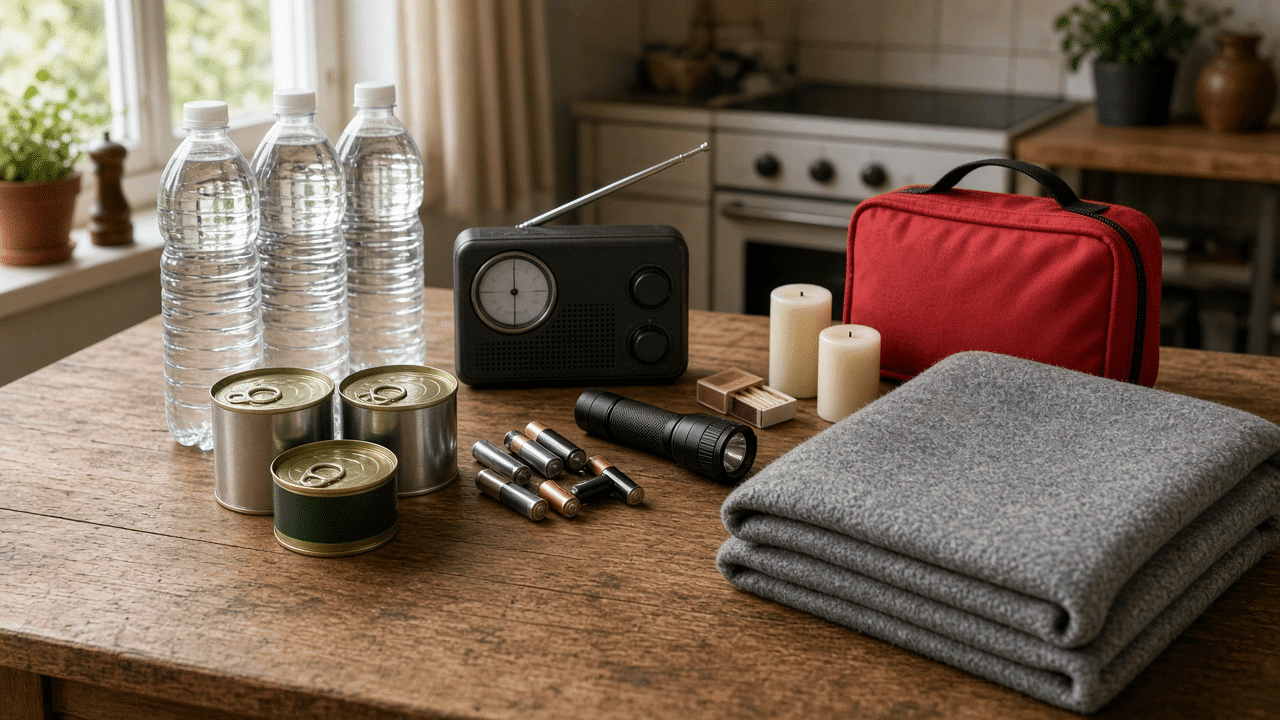
Europe’s 2030 warnings are now shaping military planning, public spending as well as civil-defense campaigns. Kubilius says the EU is implementing a “Defence Readiness 2030” agenda backed by significant funding. In Britain, Defence Secretary Wes Streeting wrote in late October that if deterrence fails, the country and its allies have little more than 1,000 days to be ready to fight, as the government’s “Be Ready” campaign asked households to keep three days of food, water and basic supplies. In late 2025, France’s armed forces chief, Gen. Fabien Mandon, said the military must be ready for a clash with Moscow within three or four years. Germany’s defense minister Boris Pistorius and military chief Gen. Carsten Breuer have said Russia could be able to mount a large-scale attack on NATO by 2029, while Polish Prime Minister Donald Tusk has pointed to 2027. Putin rejects these claims: at the Valdai forum on Oct. 1, he said Russia had no plans to attack anyone in 2029, 2030 or 2050, but warned that an attack on Kaliningrad would raise the question of using all of Russia’s forces and means.
Best-Case Scenario: A Verified Ceasefire Opens a Slow Road to Peace
The best-case scenario starts with Abu Dhabi delivering limited deals on energy strikes, Black Sea shipping and prisoner exchanges. Zelenskyy has listed a ceasefire on energy and critical infrastructure, unblocking the Black Sea and an all-for-all prisoner swap as Kyiv’s priorities, along with preparing a meeting of the Ukrainian, US and Russian leaders. Merz has suggested the local truce in Oleshky could serve as a model for a broader halt to the fighting. A full ceasefire backed by European and US security guarantees could follow. Chatham House notes that Ukraine could live with a truce that freezes the southeastern front line, provided it does not limit its ability to defend itself or join the EU. The European Council on Foreign Relations (ECFR) sets out how such a truce could be stabilized through monitoring, military hotlines and staged sanctions relief that snaps back if Russia cheats. Even its authors call this “managed disorder” rather than true peace, and say durable rules could take a decade or more to build.
Worst-Case Scenario: Failed Talks and a Wider Russia-NATO Clash by 2030

The worst-case scenario begins if negotiations collapse while Moscow holds to its maximalist demands. The Institute for the Study of War (ISW) assessed on Oct. 28 that the Kremlin is seeking US economic concessions while offering none of its own, and has revived its 2021 demand that NATO roll back its presence to pre-1997 lines. Chatham House warns that a rushed or poorly defined ceasefire could let Russia regroup, rearm and redeploy its forces, and that a European “coalition of the willing” may not deter renewed attacks. ECFR’s study opens with a hypothetical 2028 crisis in which a vague ceasefire breaks down, Russian forces cross the line and allies cannot agree how to respond. Tension is already spreading beyond Ukraine: ISW reported that drone boats struck a cargo ship off Bulgaria on Oct. 28, and Putin has warned about the Baltic Sea. In this outcome, European warnings about Russian readiness before 2030 would be tested directly, with Putin having already threatened to use all available means if Russian territory such as Kaliningrad were attacked.
Frequently Asked Questions
Did Putin say Russia is ready for war with Europe?
Yes. On Oct. 29, 2026, he said Russia was ready but did not want a war with Europe, said those preparing for war by 2030 could do so, and warned there would be no winners.
Which European countries are preparing for a possible war with Russia by 2030?
Germany, France, the UK and Poland have issued the clearest warnings, the EU is running a “Defence Readiness 2030” agenda, and Britain has asked households to stock three days of supplies.
Does Trump want Ukraine peace talks without Zelenskyy?
Not exactly. Ukraine is a party to the Nov. 10-11 Abu Dhabi talks, but on Oct. 19 Trump said he would meet Putin and Xi whether or not Zelenskyy attended and that someone else should negotiate for Ukraine.
When and where are the next Russia-Ukraine peace talks?
US envoy Steve Witkoff says US-mediated, working-level talks will take place in Abu Dhabi on Nov. 10-11, 2026, with Witkoff and Jared Kushner leading the US delegation.
Will the Russia-Ukraine war end soon?
Analysts are doubtful. ISW says Moscow has offered no concessions, while ECFR and Chatham House expect at best a fragile ceasefire rather than a lasting peace settlement.
Conclusion
Europe and Russia are both talking about 2030, but for opposite reasons. European capitals see a window in which Russia could rebuild enough strength to threaten NATO, while Putin insists Moscow does not want war but is ready for one. Between those positions sits a US-mediated process whose next test comes in Abu Dhabi on Nov. 10-11, with Ukraine at the table and Europe outside the room. Analysts at ECFR and Chatham House see the most likely outcome as an uneasy ceasefire or frozen conflict rather than a settlement. Whether such a pause holds may decide which scenario Europe faces by 2030.
Bibliography / Sources
- Ravid, B. (2026, November 3). U.S., Russia and Ukraine to resume peace talks next week, Witkoff says [News article]. Axios. https://www.axios.com/2026/11/03/us-russia-ukraine-peace-talks-uae-trump-witkoff-kushner
- Kyiv Post. (2026, November 3). US sets Nov. 10-11 Ukraine-Russia talks in Abu Dhabi as Trump pushes for peace deal [News article]. Kyiv Post. https://www.kyivpost.com/post/88971
- Kyiv Post. (2026, October 30). Putin says Russia is ‘ready’ for war with Europe, warns there would be no winners [News article]. Kyiv Post. https://www.kyivpost.com/post/88633
- Malyasov, D. (2026, October 29). Putin says Russia is ready for war with Europe [News article]. Defence Blog. https://defence-blog.com/putin-says-russia-is-ready-for-war-with-europe/
- President of Russia. (2026, October 1). Meeting of Valdai Discussion Club [News article]. Kremlin. http://en.special.kremlin.ru/events/president/transcripts/80910
- Connor, R. (2026, November 3). Ukraine war: Merz doubts Russia is serious about a truce [News article]. DW. https://www.dw.com/en/merz-sees-no-sign-russia-is-serious-about-a-ceasefire-as-he-and-zelenskyy-call-for-europe-to-help-shape-a-peace-deal/a-79836026
- Ukrinform. (2026, November 3). Zelensky outlines key topics for trilateral meeting in Abu Dhabi [News article]. Ukrinform. https://www.ukrinform.net/rubric-polytics/4181002-zelensky-outlines-key-topics-for-trilateral-meeting-in-abu-dhabi.html
- Breuninger, K. (2026, October 19). Trump says he’d meet with Putin and Xi, criticizes Zelenskyy [News article]. CNBC. https://www.cnbc.com/2026/10/19/trump-putin-xi-zelenskyy.html
- Bosotti, R. (2026, October 11). ‘Time for Ukraine to get new president,’ says Trump after Zelensky condemns diesel deal [News article]. BBC News. https://www.bbc.com/news/articles/cqe8r5l7n92jo
- The Straits Times. (2026, October 24). Key dates in the latest slump in US-Ukrainian ties [News article]. The Straits Times. https://www.straitstimes.com/world/europe/key-dates-in-the-latest-slump-in-us-ukrainian-ties
- Shamim, S. (2025, September 24). Russia a ‘paper tiger’: How Trump changed his position on Ukraine, NATO [News article]. Al Jazeera. https://www.aljazeera.com/news/2025/9/24/russia-a-paper-tiger-how-trump-changed-his-position-on-ukraine-nato
- The Brussels Times Newsroom. (2026, August 5). EU Commissioner warns of new Russia readiness before 2030 amid defence overhaul [News article]. The Brussels Times. https://www.brusselstimes.com/2259692/eu-commissioner-warns-of-new-russia-readiness-before-2030-amid-defence-overhaul
- Bancroft, H. (2026, October 25). Streeting says UK has until 2030 to prepare for war [News article]. The Independent. https://www.independent.co.uk/bulletin/news/war-uk-russia-wes-streeting-b3072913.html
- Euronews. (2025, November 21). Minister backs army chief over warning France must accept ‘loss of our children’ [News article]. Euronews. https://www.euronews.com/2025/11/21/army-chief-warns-france-must-accept-loss-of-our-children-to-deter-russia-by-2030
- Institute for the Study of War. (2026, October 28). Russian offensive campaign assessment, October 28, 2026 [News article]. ISW. https://understandingwar.org/research/russia-ukraine/russian-offensive-campaign-assessment-october-28-2026/
- Chatham House. (2026, May 28). How a Russia–Ukraine ceasefire could imperil Ukrainian and European security [News article]. Chatham House. https://www.chathamhouse.org/2026/05/how-russia-ukraine-ceasefire-could-imperil-ukrainian-and-european-security
- Shapiro, J., Charap, S., Deen, B., Haukkala, H., Krastev, I., Notte, H., & O’Brien, J. (2026, July 21). Managed disorder: The hard road to a modest peace with Russia after Ukraine [News article]. European Council on Foreign Relations. https://ecfr.eu/publication/managed-disorder-the-hard-road-to-a-modest-peace-with-russia-after-ukraine/